Start with the decision: planning a connected water project
Useful water data starts with a clear operational question. Here is what to establish before choosing meters, sensors or a telemetry platform.
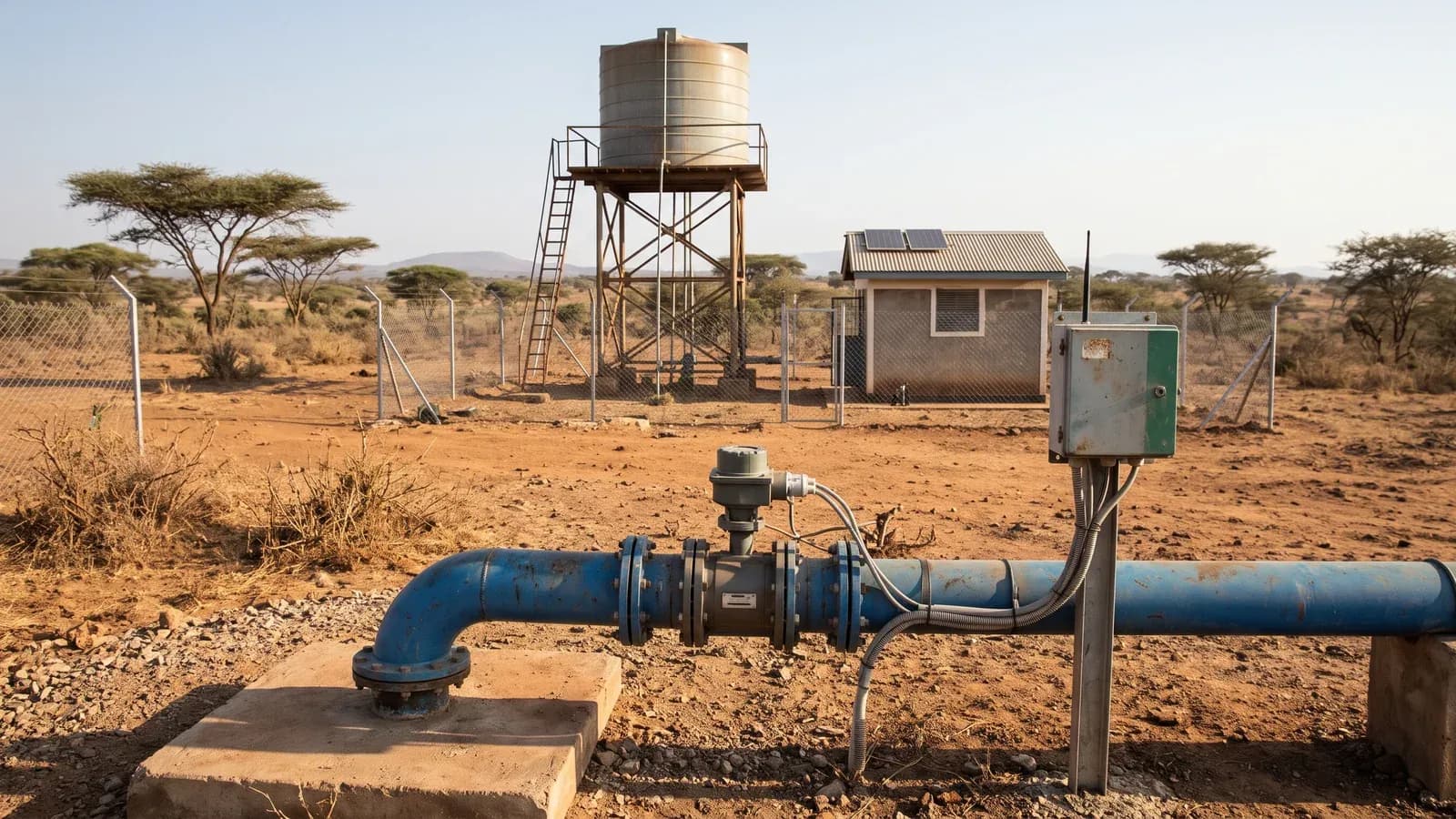
A connected water project starts with an operational decision. Do you need to understand how much water a borehole produces, whether a pump is running, or where a difference between production and metered use needs investigation? Naming the decision helps define the measurements, reporting intervals and people who will use the information.
1. Name the question and the action
Write down one question that your team needs to answer, then identify what should happen when the answer changes. A useful brief connects a measurement to a practical action, such as reviewing a night-flow pattern, checking a pump or investigating a meter discrepancy.
- Which asset or part of the network needs visibility?
- Who reviews the information, and how often?
- What change should trigger a notification or a site visit?
- What records would help the team investigate later?
2. Review the equipment already on site
Record the installed meters, pump controls and available interfaces. Include equipment models, pipe sizes, power arrangements and any existing records. Compatibility should be checked before treating an existing output as a usable telemetry signal. A site assessment can establish where integration is practical and where additional measurement is needed.
3. Plan for power and connectivity
Describe the available power, the location of each asset and the communications options at the site. Reporting needs differ: an occasional operational reading and a prompt fault notification may require different designs. Agree on how the system should present a delayed reading or an unavailable connection so that old data is not mistaken for a current measurement.
4. Make reporting useful to the people who act
Choose a small set of reports around the original question. Define measurement units, timestamps, reporting periods and the people responsible for reviewing them. A water balance, for example, needs a clear period and an agreed set of inputs before differences can be interpreted usefully.
5. Start with a scope you can review
A focused first deployment creates a chance to check the measurements, notification process and reporting workflow together. Use that review to decide what to adjust before extending the system. Device selection, installation, calibration needs and ongoing support should be part of the project scope.